


How I Lead

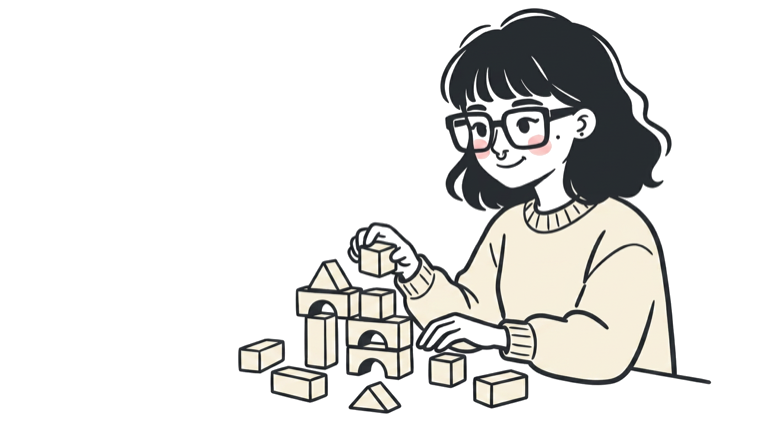
My job as a leader isn't to hand my team a process. It's to build a space where designers can learn and grow as the technology around them keeps changing — and to make sure the work we do together is holistic, not handed-off.

Building the space

Protect the conditions, and the work follows.

I make growth explicit.

Every designer has a goal plan they own, reviewed each quarter. I track where each person wants to go next — senior, lead, or principal — and shape their work and visibility to move them there. Growth isn't a year-end conversation; it's a standing one.

I improve processes, not people.

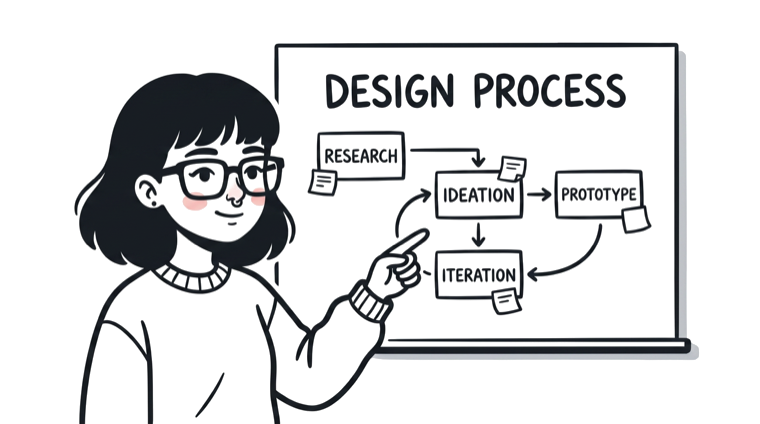
When something isn't working, I look at the system around the person before the person. Most "performance problems" are really clarity, resourcing, or process problems wearing a costume.

I build rituals that compound.

I established team cadences that make learning communal: a recurring research-and-design journal where designers share work-in-progress for open feedback, a regular team reflection, and protected peer-review and working sessions. These aren't status meetings — they're how the team teaches each other and calibrates on quality.

I lead the team into new technology, not around it.

As AI reshaped our field, my job was to make it learnable — strategy, onboarding, and new ways of partnering with product and engineering — so the team grew with the change instead of bracing against it.

I improve processes not people.

Holding the long view

Long-range visions that give the company something to build toward.

What ties these together: each starts from a holistic read of the whole journey, takes a big enough swing that people can "fight for great," and is built to outlast any single roadmap cycle.

The operating system for a design team

A team scales on its systems, not its heroics.

A goals framework, by role

I designed distinct goal tracks for individual contributors, managers, and directors — each mapped to the same core competencies so growth means the same thing across the team, but the bar rises with level. Goals are owned by the designer, reviewed quarterly, and tied directly into the annual performance process.

A career-leveling structure

I co-created role documentation spanning the full design and research ladder — from early-career designer through principal, plus the management track — benchmarked against how the broader industry evaluates designers, then customized to our team and culture. Every designer gets a clear, legible picture of what "next" requires.

A request-intake & collaboration model

I rebuilt how work enters the team and how UX partners with product and engineering — embedding problem-framing practices at intake so the team collaborates on the problem before committing to a solution.

Cadences that institutionalize quality

The journal, reflection, and peer-review rituals aren't just culture — they're how quality review and cross-team alignment actually happen, on a schedule, instead of by accident.

What it produced

The outcomes those systems produced — directional, not absolute.

Cycle time
Roughly halved
Average design cycle time dropped substantially across the year — without sacrificing quality review.
Work in progress
Held in a healthy band
WIP per designer stayed inside a deliberate range — productive, not so much that quality or people burned out.
Learning cadence
Sustained every quarter
Journal presentations, peer reviews, and workshops happened consistently — learning became a rhythm, not an aspiration.
Design cycle time — across the year
Start ~Half

Illustrative — shape of the improvement, not exact figures.

In short

  • I lead by building the space — safety, autonomy, clarity, and growth — so designers do their best work as the field keeps changing.
  • I work backwards from solutions, with my team and with stakeholders, to make sure we solve the right problem together.
  • I hold the long-range vision — multi-year bets across the marketplace that give the team something real to build toward.
  • I built the operating system underneath it: a role-based goals framework, a career-leveling structure, an intake-and-collaboration model, and cadences that make quality and learning routine.
  • And it shows up in outcomes: faster delivery, sustainable load, and a team that learns on a rhythm.
Back to work Supporting frameworks and vision decks available on request — originals are confidential.